Nutrition is one of the most essential aspects of living a healthy life yet so much of the content online surrounding this topic is either misinformed, reactionary or exaggerated. As someone who recently got into a gym routine, my social media feed is full of weightlifters, doctors and nutritionists who make claims about the food that most of us on a daily basis, and parsing between the weeds can get difficult, especially for a novice. This 2023 systematic review of 64 studies from the National Institute of Health (NIH)stated that half of the reviewed studies found that nutrition information on social media was “suboptimal” and “one of the biggest limitations of using social media for this purpose (nutrition) was the lack of quality and reliability of health information”, while also acknowledging the limitations of the review because of biases like inconsistent sampling and accuracy checks across each and every individual study.
The audience I’m targeting through this blog post are people like me, who had a very limited knowledge of nutrition and diet but want to learn about it to implement changes in their daily life. Within this post, I want to teach my audience how to utilize the SIFT method to cross-reference misinformation, and I’ll be doing so through a few examples. I will also talk about creators and websites that I have found to be reliable based on my own experience using this method. I personally like the SIFT method because it gives me a process that I can go through without constricting how to view the content, and allows me to make my judgement based on a few important factors.
First off, I want to begin with the SIFT method itself which follows a simple structure:
S: Stop (and think about your emotional response)
I: Investigate the Source
F: Find Better Coverage
T: Trace Claims and Quotes to their original content
Like I said, this gives us a process of acknowledging our own emotional response, looking at the source of information, looking for other sources to see if they corroborate the information and then tracing the original claims made in the video.
Let’s take a look at an example that this method could be used for.
Example #1
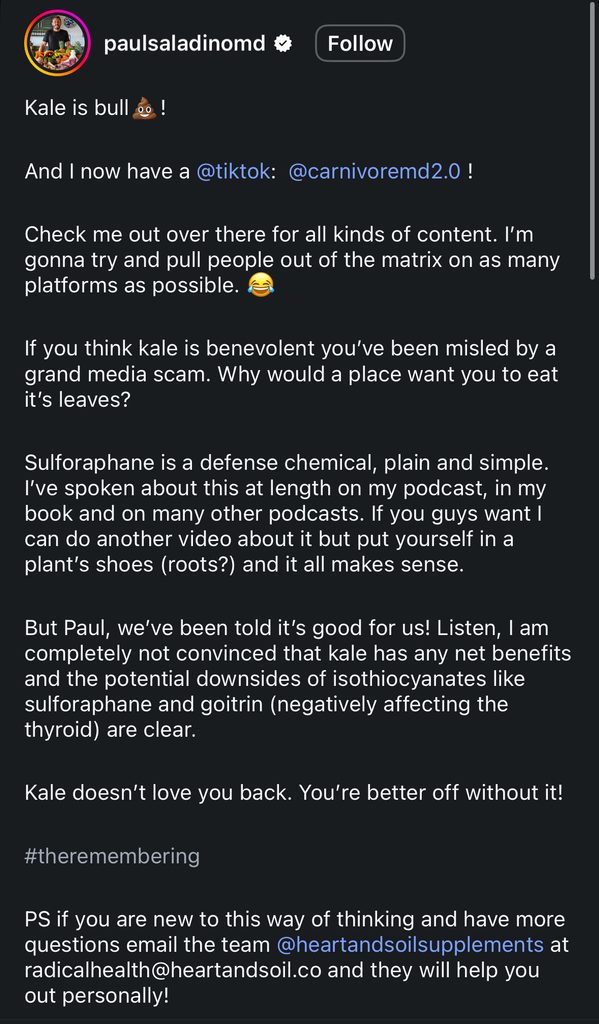
If you’re on nutrition social media long enough, these type of videos show up often, demonizing certain food groups. Using the SIFT method, let’s go through the videos. The first video makes a number of claims about kale while in a super market, including that it’s “garbage” and “doesn’t want to be eaten”, and the second furthers that statement, saying that “plants don’t want to be eaten”.
S: For most, including myself, my immediate reaction was to be skeptical of the claims. Kale, at least from my experiences, is generally considered a “healthy food” and I would be curious to see what evidence the creator provided for this.
I: From the creator’s profile itself, we can see that he’s an independent “double board certified MD” named Paul Saladino. He also has links to his own website in his bio, where he employs a quiz and later a monetized meal plan for interested individuals. A little bit of research through Google also reveals that Saladino founded/co-founded two animal-based food and supplement brands – Lineage Provisions, and Heart and Soil. Saladino also toggled between a carnivore and animal-based diet, as noted in this New York Times article, and is the author of “The Carnivore Code”. The NYT piece goes on to quote “blue zone” author Dan Buettner that he knows of “no long-lived culture in the history of the world that were mainly meat eaters”, and also refers to a 2023 New Yorker article, which notes that “studies of Neanderthals have turned up evidence that their diets included dates, tubers and other leafy foods in addition to meat.”
Saladino’s views appear to have a very clear bias, in terms of his personal lifestyle and business goals, that could affect his portrayal of the information. Looking up what other experts in this field or the general information coming from larger medical boards is an easy way to utilize the SIFT method here.
F: Most major studies appear to be against this claim. Google is one way to look it up but published studies on PubMed are a great way to scientifically verify the correct information.
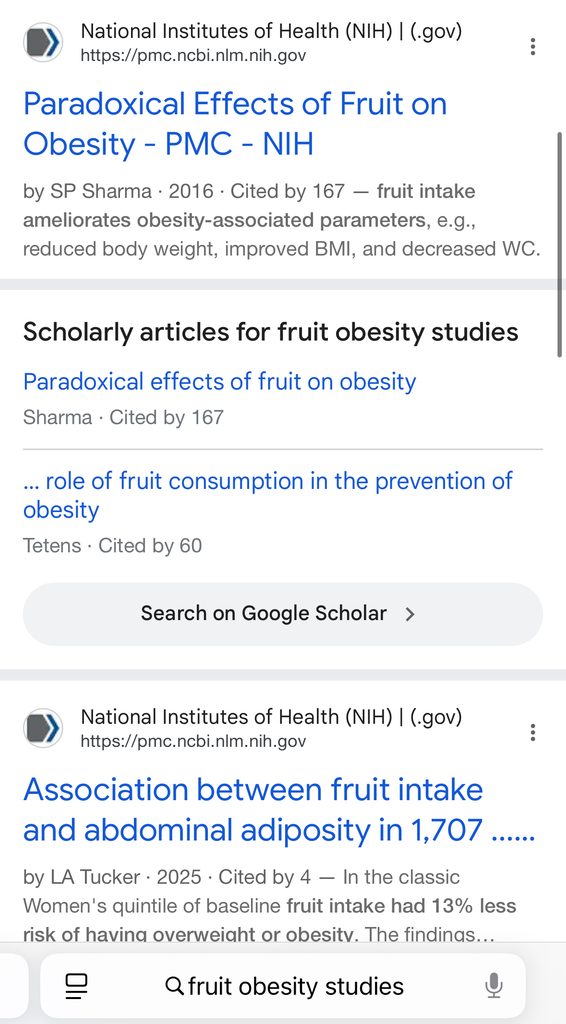
This 2017 meta-analysis published in the International Journal of Epidemiology, a reputed medical journal published by Oxford University Press, observed 95 different studies from 142 publications, and found that there was an associate risk in terms of an increase in fruit and vegetable consumption, and the intakes “were associated with reduced risk of cardiovascular disease, cancer and all-cause mortality.”
This would be one source to choose from; as mentioned earlier, the NYT and New Yorker articles both referred to other biologists, rat studies and Neanderthal findings to refute the first point as well. While studies almost always have limitations, through confounding factors of the participants, a general consensus, such as the one shown in this study conducted over a number of years, clearly lands on one side. Saladino’s videos also don’t mention a key aspect of nutrition, which is it’s individuality. Each person has a different reaction to foods, and a one-size-fits-all approach is never recommended.

The American Board of Medical Specialists stated as such in this statement, supporting the view that it is their “fundamental premise that all medical care should represent a shared decision agreed upon between a patient/guardian and a health care provider.”
T: Here comes a part of the video that could be difficult to administer within the SIFT method. Saladino doesn’t refer to any study or article within the video or within the description. Instead, he states that he’s spoken about the defense chemical sulforaphane on his “podcast, in (his) book and on many other podcasts” (shown in Image 1 above). Cross-referencing his claims therefore becomes almost impossible since his claims boil down to anecdotal or purely biological assertions. In this scenario, the F part of the method becomes even more important.
Example #2
Now let’s take a look at an example that I think does a better job of being open to the method, and providing more evidence-based information. This Instagram reel is a little different than the first one, since the creator here is responding to a claim made rather than making one herself but the difference in presentation is apparent.
S: This information aligned more with what I generally knew in regards to fruit consumption in that it was healthy. For a young person trying to figure out a healthy diet, the claim fruit makes you fat could easily be used to eliminate that category from your daily intake. Therefore, researching this claim could be extremely helpful.
I: From her website, the creator is Dr. Jessica Knurick, a “Registered Dietitian with a PhD in nutrition science.” While Saladino has had a number of major organizations, medically and journalistically, speak out against his claims, Knurick doesn’t have many. Interviews with Trevor Noah, NPR and other podcasts make up the bulk of her online presence outside of her informational content so in this case, it would be a little difficult to gain an outside source’s perspective on her. However, cross-referencing her citations could work as a way of fact-checking her.
F: One way to utilize the SIFT method is to look for organizations who might disagree with the original content and see if their evidence aligns themselves with the claim or not.
Despite often being critical of HHS’ polices, Knurick’s claim here is supported by them. In the Scientific Foundation for the Dietary Guidelines for Americans from the HHS Realfood.gov website, HHS states that “RCTs demonstrate beneficial cardiometabolic effects of minimally processed carbohydrate-rich foods, such as intact fruits, vegetables, and whole grains”, also noting that higher dietary fiber, which fruits often have, was “associated with lower risk of all-cause mortality (17%, Moderate certainty evidence), colorectal cancer (16%, Moderate certainty evidence), type 2 diabetes (8%, Moderate certainty evidence), and coronary heart disease (20%, Low certainty evidence).”
T: As shown throughout her video, Knurick makes it easy for a viewer to cross-reference her, providing the names of studies on screen, as well as PubMed Identification Numbers (PMID). This makes it extremely easy to administer the “T” in SIFT and verify if the number she used are falsified or not.
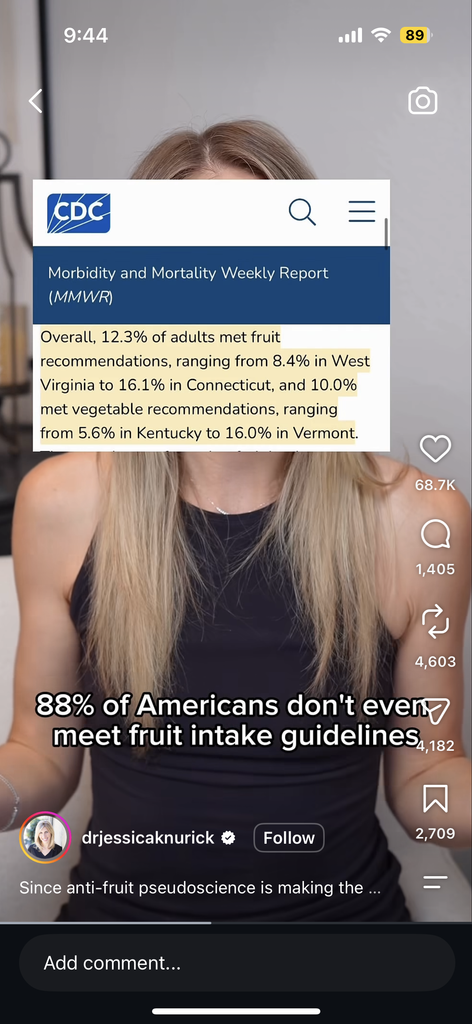
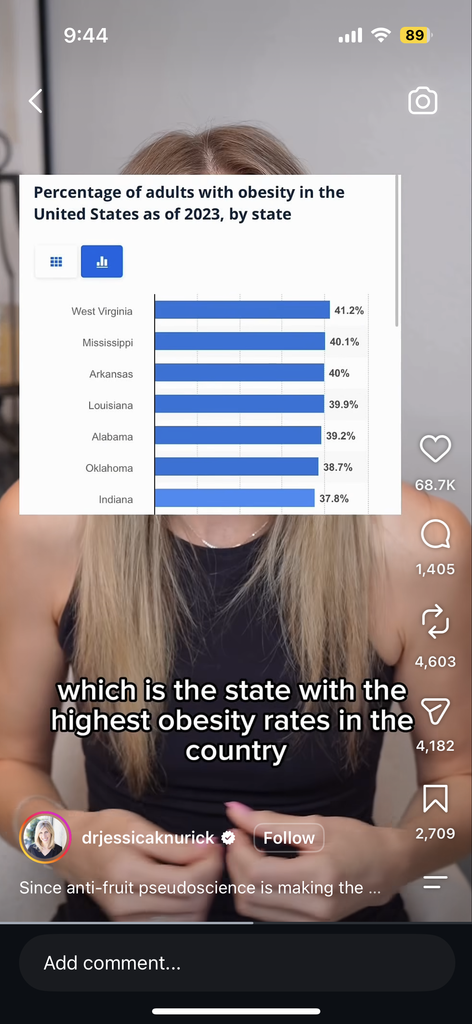
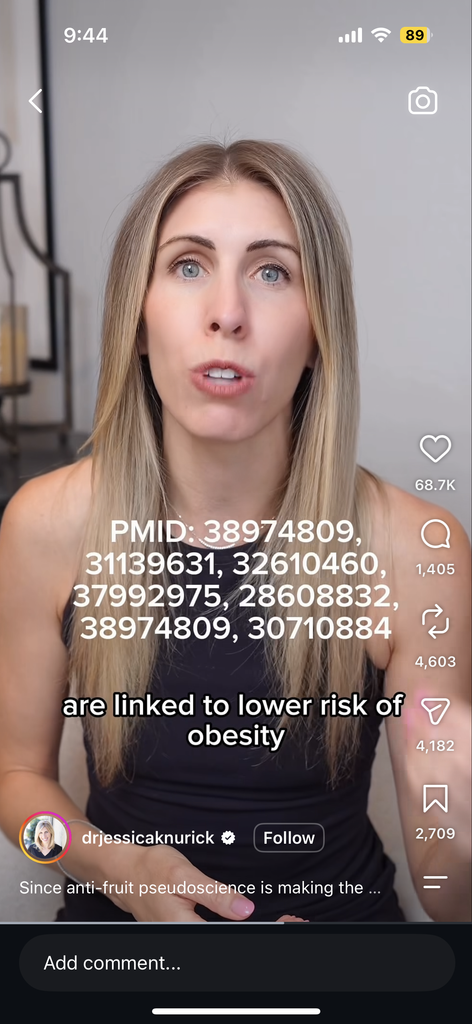
For example, we can easily look up something as simple as “CDC, 12.3% of adults, fruit” and confirm that the screenshot from the CDC’s own website in January 2022 is correct.
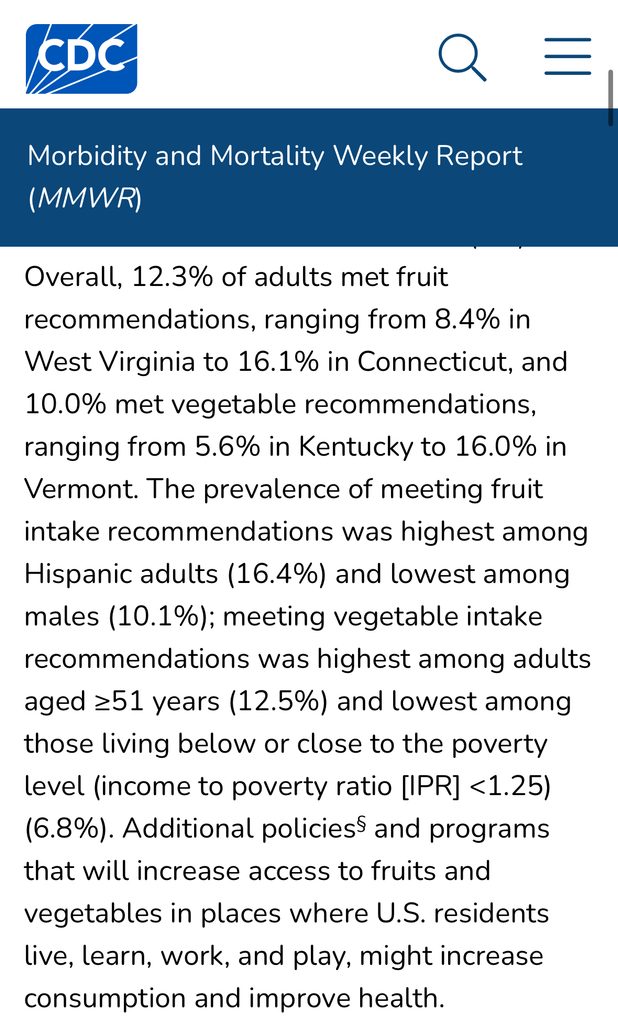
While Knurick may have personal beliefs that shape her worldview, her scientific advice seems to be influenced mainly by study-backed evidence.
Through these two examples, I hope I conveyed the usage and helpfulness of the SIFT method in weeding through nutrition misinformation on social media. While a refutation doesn’t always require tons of studies or deep-dives into a creator’s background, if they make certain claims with no sources or even with a source that you think could affect your daily choices, using this method to verify if the advice is correct or not can be extremely beneficial.
Especially for young people, like myself, who scroll for hours on social media, conflicting information often piles up over time. Making sure you get your information from nutritionists and doctors who understand what the science says, and are able to provide you with the sources is the bare minimum to fact-check rampant misinformation.
Leave a Reply