As misinformation rises, I think sites like NewsLiteracy’s RumourGuard, Bad News and Fake It Till You Make It can all be valuable tools when combating false information.
I began with the RumourGuard tool and found the depth of topics and factors to be very informative. While misinformation can be grouped into one large category, I thought the separation of tactics, including confirmation bias, emotional manipulation, misattribution, false context or conspiratorial thinking, clearly described the ways in which misinformation can be pushed.
The way I navigated the site was by first looking at the factors which the site looked at – authenticity, verification by a credible source, evidence, proper context and reasoning. I appreciated how in-depth the site went in providing tutorials and videos on how to research each factor. In particular, I enjoyed the quizzes on how to make sense of data in graphs/charts, the lesson on verifying social media content and learning about logical fallacies.
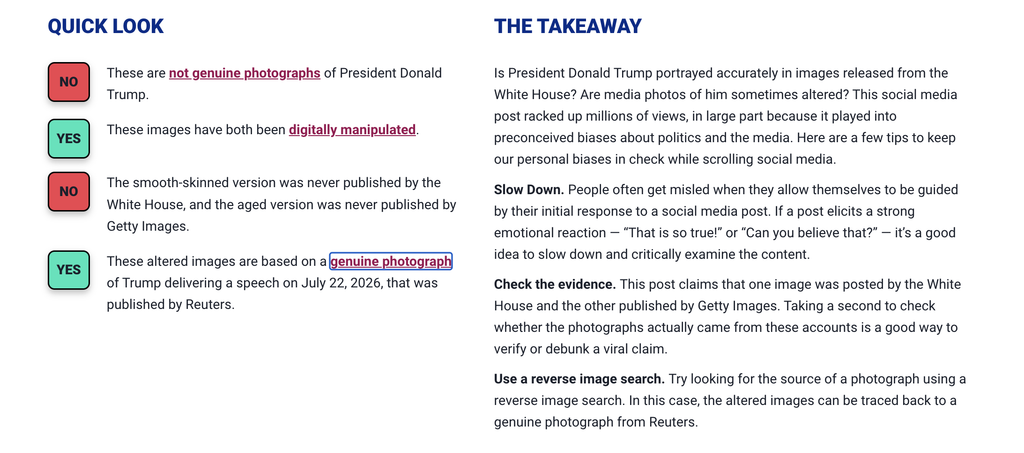
After looking at the factors, I went through a few of the topics to see how RumourGuard applied these techniques. I began with the topic of confirmation bias and selected the first instance, which showed two altered images of President Donald Trump. Using the five factors, the site determined that both pictures had been altered, and neither had been published by either Getty or the White House as was initially stated in a post on X.
As deepfake technology has increased rapidly, its usage in our current political environment is prevalent. This PBS article discussed the Trump Administration’s usage of doctored images, citing an edited picture of civil rights attorney Nekima Levy Armstrong posted by the White House and Homeland Security Secretary Kristi Noem. It also discussed how the current administration uses the idea of jokes or memes to potentially shield themselves from accusations of misinformation.
I think RumourGuard as a whole was a very interesting site and extremely useful for pointing out misinformed articles. Having never visited the tool before, I think this is a website that I’d share with my family and friends to point them in the right direction on how to properly verify information before sharing it.
The game I chose to play was Bad News. This game took the opposite approach to RumourGuard, providing a satirical and interactive experience to show the audience how easily misinformation can be spread. While the posts did feel exaggerated, I felt it did its part in portraying how riled up different social media tactics can get people.
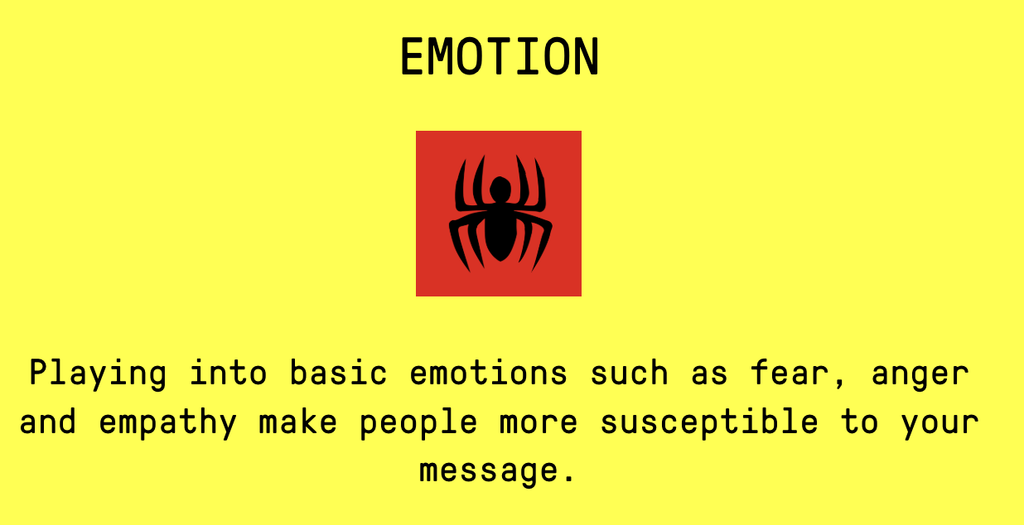
The game begins by establishing yourself as a somewhat reputable source, and then slowly degrading into posting increasingly polarizing or emotional content. Bad News touches on six different types of misinformation strategies – impersonation, polarization, emotion, conspiracy, discrediting and trolling. The game allows you to post content relating to each one of these strategies and see how citizens respond or react to these articles. At the end, I finished with a follower count of 17, 153.

I think this tool, while not as informative through videos and real-life examples as RumourGuard, can still be useful, especially when relating to children. The game touches on each tactic and provides some context on how each can be harmful, and also covers why the strategy is misinformation at the end. However, I also think Bad News reflected our current state of social media discourse really well. For example, this article from the New York Times talked about how politicians currently running for positions are often critiqued on their social media postings from years prior. Accounts fighting for one side of the political aisle constantly refer to those tweets as a form of agreement or negative assessment. This pulls from a number of tactics listed in the game, including emotion and polarization.
Overall, I think all the tools listed were useful in what they intended to do. While I thought RumourGuard provided the best information on misinformation, the interactive game were fun in learning how quickly misinformation can spread.
Leave a Reply